The Angel of Pessane
A stranger is found dead in the snow. There are no footprints. The bishop is convinced the crime is the work of gypsies. But Horthólary suspects the death is related to the man's curious passion..…
Read a sample
-
AT FOUR O’CLOCK in the morning of 1st January 1776 the temperature across the central Maladie fell so low that on the third strike of the hour the pedestal of the statue of the Archangel Gabriel, which has stood atop the western gable end of the cathedral de Saint-Gwenolé-de-les-Ponts in Pessane - the region's largest, but not titular town - for five hundred winters, clove in two. Although his wings were already spread, Gabriel, it seems, was not prepared for his sudden release, and the statue fell crashing into the Place de la Guerre below. The master mason of Pessane - one Guillaume Combastel (whose grandmother is not unknown to us) was tried for the crime. He was sentenced to be flogged (although it is doubtful that this punishment ever took place) and given a fine of forty livres - roughly half his year’s wages. However, he retained the commission to carve a new statue for the cathedral, there being no other artisan capable of the task in the town.
This same night, Madame Esclarmonde de Savignan, now well into her eightieth year and suffering from the common misfortune of the elderly, which is to sleep when one wishes to be alert and to remain awake when one wants only to forget, looked from her window and saw silhouetted against the full moon a real angel. He was in full flight and wheeling across the western sky like a shooting star, so she swears.
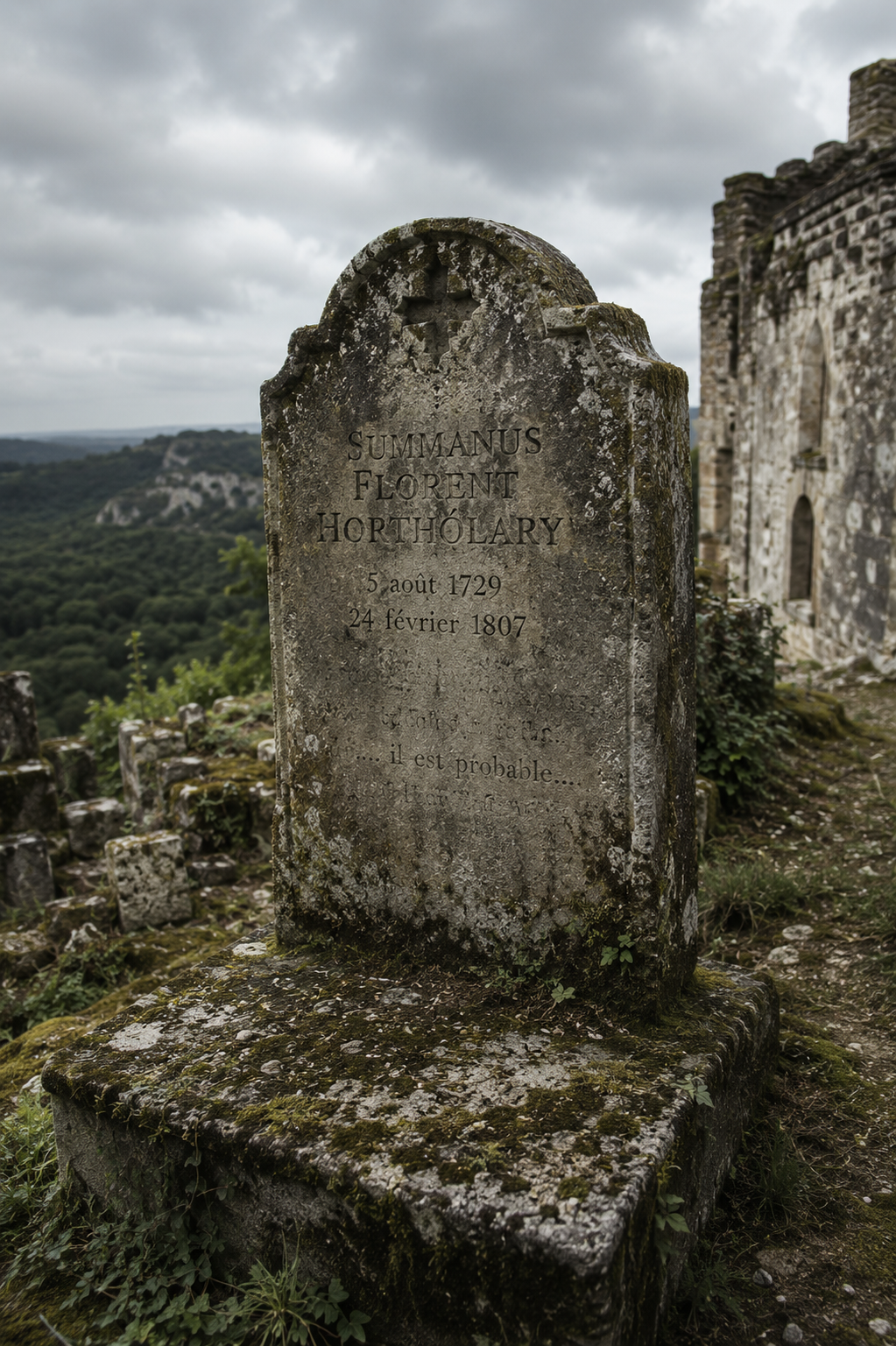
It is possible that these two incidents are related; but not, surely, the third: a grisly discovery made the following morning half-a-mile south of the town's walls in Bélibaste's wood. This last episode is recorded by several of the citizens of Pessane which, as the reader may recall, includes among their number Summanus Florant Horthólary, the Professor of Anatomy and Physiology at the l'Academie des Apothicaires et Medicins. It is, of course, his encrypted journals that form the basis of these tales. However, in this case we can also draw upon accounts found among the papers of Bishop Philippe Rapin, who presided over the See for over thirty years from 1758, and in the personal letters of Jean Gélis, who was Sénéchal of Pessane during part of this period. Rapin kept meticulous records of the comings and goings of the people of Pessane that are now preserved in the Vatican Library in Rome. Jean Gélis was writing to his younger brother, Armand, who was the priest at Maladie, the next largest village to the north of Pessane, whose walls mark the beginning of the wild oak forests of the Haut-Maladie; his letters are held by the University at Pessane Library (accession No. OJR/1038a). In addition to these two sources, we shall also draw upon an interesting letter published in Nicholson's Journal of London in their Proceedings for the year 1771 by one Robert Sedgewick. In fact, it is Sedgewick - an enigmatic and pioneering figure almost unknown in his homeland - who is the central character in the mystery which begins with the following entry in Bishop Rapin's Parish Calendar:
“This morning,’ writes the Bishop, ‘were found the mortal remains of Le Dindon, his Godless life struck out by gypsies in Bélibaste's wood. May God have mercy upon his soul.”
-
THE HARD WINTER of 1776 is well documented in Europe. In London and Paris the great rivers froze; the merchants and showmen of these cities held markets and fairs on the ice. No one in the cities wanted for anything, but beyond their walls an arctic wind blew across the continent, and it worked its way deep into the hearts of men. The fertile aeolian soils of the central plains were transformed into a Siberian landscape of unending white. The winter crops lay frozen in the ground. There were blizzards and men and livestock were lost in the deadly drifts of snow that formed in the slightest depression or against the meanest of obstructions.
Nowhere was winter harder than in the Pays Maladie. As the reader may recall, the region divides itself starkly in two: the Haut-Maladie - deeply fissured and heavily wooded; and the Basse-Maladie - comprising low, rolling hills, although still largely forested. The university town of Pessane lies at the intersection of these two disparate landscapes, one almost pagan in its isolation, the other just entering the industrial age. Here, the silvery braids of the River Varges, which have leapt and spat their way through the dark oak-woods of the Haut, in myriad channels, come together in the mighty confluence upon which Pessane is built; it is the birth of the Grand Varges. There is a road with a signpost that directs the traveller, should the road have been completed, to Paris via towns and cities too innumerable to be listed on the washed-out timber.
In the winter of 1776, it was at this point that the river conceded to the hoary hand that lay heavy upon the land, and froze. For almost a reach - as far as the monastery at Cazaux - the waters appeared to stand still, although, of course, beneath the opaque lens, life carried on much as before. Consequently the river is much frequented by the citizens of Pessane, whose children go there to skate, although they are supposed to be attending the collège on the eastern bank.
It is a group of these children, led by Guillaume Tichot, the wily son of the baker, M. Tichot, whom we now follow as they cavort and stumble over one another like the breaking edge of waves on the beach. Guillaume is perhaps a little too tall for his age and already has a soft down upon his chin. Like the Varges, he is leaving his childhood behind him. All arms and legs, he spends as much time in the snow being pelted with snowballs by his compatriots as he does running through the oaks beside the river. And like the great river, he has uncertainties, perhaps even regrets. There are things that trouble them both. This is why he breaks off from the main group of boys and stumbles a little way into the woods. He has reached that difficult age where new sensations crowd into his mind but find no soil in which to root. Elbowing aside the simple pleasures of boyhood, which Guillaume Tichot understands intimately, having pored over each and every one of them, these new feelings wander across the novel landscape of his mind like strangers in a new world: the satisfaction he now sees in the efficient escape of a rabbit, where once he rued his inaccurate aim; the elegant simplicity in the pale flower of the mistletoe, the snow clinging to only one side of the oak trunks; the hair of Raymonde Bélibaste - the ugly daughter of old man Bélibaste, whose farm abuts the wood, and who sits in front of him in the collège - which he longs to touch. All are invaders of the young boy’s mind. Even now he is being drawn to the three buildings that lie just beyond the wood, one of which is home to Raymonde Bélibaste.
A jaybird marks Guillaume Tichot’s progress through the wood behind the Bélibaste farm. The wood rises steeply up from the Varges in a series of broad terraces. He can see from halfway up, through a stick-crackled sky, the other boys horsing around down on the ice. He wonders briefly why he is not with them, why instead he is moving cautiously towards the edge of the wood where he might look down upon the Bélibaste farm. He has no intention of paying a visit; he does not like Madame Bélibaste, who smells of manure when she visits the bakery, and the son is nothing but trouble at the collège. And yet it is not an unpleasant feeling, this anticipation; this half-hope of seeing the girl haul a bucket of leftovers across the yard to the pigs. Perhaps he might fire a stone at her with his catapult; maybe he will kiss her. He waits, watching, sitting in the fork of a gnarled old oak. But Raymonde does not appear; instead smelly Madame Bélibaste sits a while on a bench outside the house enjoying the morning sun. It is a cloudless morning and although it is not yet nine, the sun is already warm as it rises above the trees.
Guillaume decides to return to his friends, and while he trudges through the snow of the upper terrace he thinks about Raymonde Bélibaste’s breasts. Presumably she has some, although they are not easy to see because of the way she dresses. Would they be like Clotilde Lefrebre’s, whose orbs he glimpsed when they whipped her on the Feast of Saint Pierre-Julien? He tries to imagine what Raymonde’s breasts would feel like and this thought he finds so compelling that, notwithstanding the chill of the early hour, he is forced to delay his return for a few moments, leaning awkwardly against another oak.
It is at this moment that Guillaume Tichot spots the figure in the snow ahead. His convulsions subside but the threat of discovery does not materialise as the figure - it is clearly a figure he can see now, sprawled face-up in the snow - is not moving and, although he can never satisfactorily explain it, he knows it is without life. Its discovery has spoiled the moment. Irritably, Guillaume Tichot trots towards the spot in the snow, adjusting his woollen britches and wiping his hand on a spray of mistletoe. He peers over the motionless figure. It is a man and he is dead. His frozen features preserve, in perfect frosty exactitude, an expression of abject fear.
I have mentioned that the town of Pessane marks the boundary between two distinct geographies: the Basse-Maladie and the Haut-Maladie. The observation is more than a convenient short-hand. The town actually straddles these two extremes within its walls. One half of the town - that comprising the university and the medieval market around which the town formed in the twelfth century - sits proprietorially atop the residual sandstone outcrops of the Haut, watching somewhat anxiously over the other half - the merchant quarter and various ghettos which sprawl over the Basse hinterland at more leisure.
In between these two, simultaneously dividing and uniting them, is the magnificent cathedral church of Saint-Gwenolé-de-les-Ponts. The northern half of the church’s nave is built into the sandstone rock it bestrides. Needless to say its tenants work tirelessly to maintain the suspicion and animosity in which each moiety of the town holds the other. Thus we are not surprised that it is Bishop Philippe Rapin who is the first official of the town to learn of the discovery in Bélibaste Wood. He is pacing the long first-floor room of the Bishop’s Palace, which is not a palace at all, of course, but a haphazard amalgamation of four of the medieval houses of the old town. He is a thin, wiry man, whose sharp nose appears to have been drawn out from its brethren features by means of a precise instrument attached to the end of it. Thus, from the tip of this extremity to the base of his neck and, above, to the vault of his skull - which he shaves to the skin - there are unbroken lines rendering all three points of a triangle: Bishop Rapin peers ceaselessly into the future.
The upper room, which is known to all as the Hall, and in the summer the little garden at the rear, are the Palace’s chief attractions. At one end of the Hall a large fire burns in a hearth that fills the gable end of the building. There are two griffins carved into the red sandstone of the surround which, in the flickering light of the fire, seem to writhe crazily in exquisite pain. In the centre of the room is a long table filled with piles of papers, and before it is a gilded chair which is almost, but not quite, a throne. At one end of the table a young secretary is writing in a journal; before it stands Guillaume Tichot, shifting uneasily from foot to foot and casting a wary eye on the leaping griffins who seem to symbolise so precisely his predicament. The bishop circles him like a hungry wolf. He is not an especially tall man but his well-proportioned and slender frame, and the flowing scarlet robe he wears at all times, give all who know him that impression.
“And what did you find at that place, Tichot?” asks the Bishop. “Be precise, boy; and the truth at all times. It is God to whom you are speaking now. Do you understand that?”
The Bishop fixes the boy with a piercing stare. The effect, since his distorted nose has also drawn outward the thin invagination of his mouth, is that the Bishop wears a salamander-like smile. That is his nickname - Le Salamandre. Young Guillaume Tichot is already thinking of the Devil and he would not be at all surprised to see a forked tongue slip between the sacred lips. He licks his own and is heard to swallow hard.
“Well?” demands the Bishop. “Begin!”
Upon his discovery of the body, Guillaume Tichot thought nothing more of it than to tell his compatriots, who were still frolicking upon the frozen river. If the truth be known, the boy was less concerned with the stricken man as he was with having a good yarn to tell his friends. Naturally they didn’t believe him, and besides they were having far too much fun on the ice to bother with what the melancholy Tichot thought he may have seen buried up in the woods. It was probably a dead boar, they thought, or just another one of his annoying pranks. So it is another hour at least - approaching ten o’clock in the morning - before Guillaume Tichot leads Hervé, his older brother, and Rémi Giraudat, whose family works in the paper mill, back up the river terraces to the place where the frozen body lies sprawled in the snow. Guillaume has no trouble locating the spot for, as he tells Bishop Rapin, he follows his own footprints: “... for there weren’t none others that I could see anywhere abouts.”
We are fortunate indeed in having Bishop Rapin’s Parish Calendar to draw upon so soon in this affair, for despite what we may think of him as a man, there is no doubt he takes great pains to ensure his records are accurate to the smallest detail. He is checking them again now, over the shoulder of his secretary. How did he learn of young Tichot’s discovery? It was through Rémi Giraudat, Tichot’s classmate, who for a number of years now has been the Bishop’s chief informer on matters concerning Monsieur de Gubernatis, the new teacher at the collège, whom Rapin suspects of having Palbanite sympathies.[ A secretive religious sect. For a short history of Palbanism see ‘Nemestrinus’. For a more lengthy discussion see ‘The Visions of Lazaro’.] Rapin himself is not a religious man. True, he is pious, but it is doubtful he believes one tenth of the dogma of his faith. He is, above all, an administrator; or rather, one should say, an overseer; for he does less managing of his See than he does observing it. His spies are everywhere and his record-keeping is consequently meticulous, as we have already seen.
“Go on,” demands the bishop, returning to stand menacingly over the boy.
Of course, he is told everything - in as much as there is anything to tell: a man lies dead in the snow; he is frozen and must surely have lain there all night at least. Here, Tichot adds the keen-eyed observation of a hunter - that the body had not yet been scavenged for meat by wolves or foxes. Rapin does not see the value in this observation, but the professor will. Like others whom the Bishop will interview over the coming days, Tichot also attests that the snow about the body was undisturbed, save for their own footprints. This point, too, is overlooked by the Bishop, who is keen to move on to matters of the flesh. And the boy obliges. The body, he says, shows signs of having been heavily beaten. The face is scarred and bruised, the clothes much rent. Rapin makes sure it is all written down, and when it is, he paces thoughtfully to the two heavy doors at the other end of the Hall and turns a heavy iron key in the lock. Philippe Rapin is not a confident man. This much is obvious from the pains he takes to acquire information about his fellow citizens. It is tempting to assign such weakness to the shock of faithlessness, but we must doubt whether Philippe Rapin ever entertained such fancies. His is a religion of power, not love or resurrection: he wears the frock to hide certain shortcomings, both of mind and body. He raps the table with his fist, making the papers jump.
“Place on this table everything that you took from his pockets,” he demands.
He is much pleased with the effect his perspicuity has on the boy who, in turn, who adopts a tortured expression, no doubt the best effort the child can muster to convey innocence. “Come, come Tichot. Do you expect me to believe that you did not go through the man’s pockets? Where is his pocket watch? His purse? His letters?”
Guillaume Tichot shakes his head. It is true that Hervé picked up a stick and tried to lift a flap of the dead man’s jacket, but it was frozen solid to the body and even Hervé Tichot is not man enough to actually touch it with his hands. The truth of the matter is that the boys left empty-handed, but Bishop Rapin is not convinced. He will order that the boy is soundly beaten and an hour of fruitless exertion will leave him none the wiser. But before this, a thought occurs to him:
“This man,” he inquires, “have you seen him before?”
Guillaume Tichot stares back at Bishop Rapin dumbfounded. Can it be that he does not know? He glances at the griffins. Their writhing agonies do not reassure him. The secretary’s pen stops its irritable scratching. Perhaps it is a trick?
“Sire, I thought you knew - it is Le Dindon. The man in the wood is Le Dindon.”
-
Prologue
The Body in the Snow
Bélibaste Wood
An English Watch with an English Name
Counterfeit Egyptians
Madame Esclarmonde de Savignan
Le Dindon
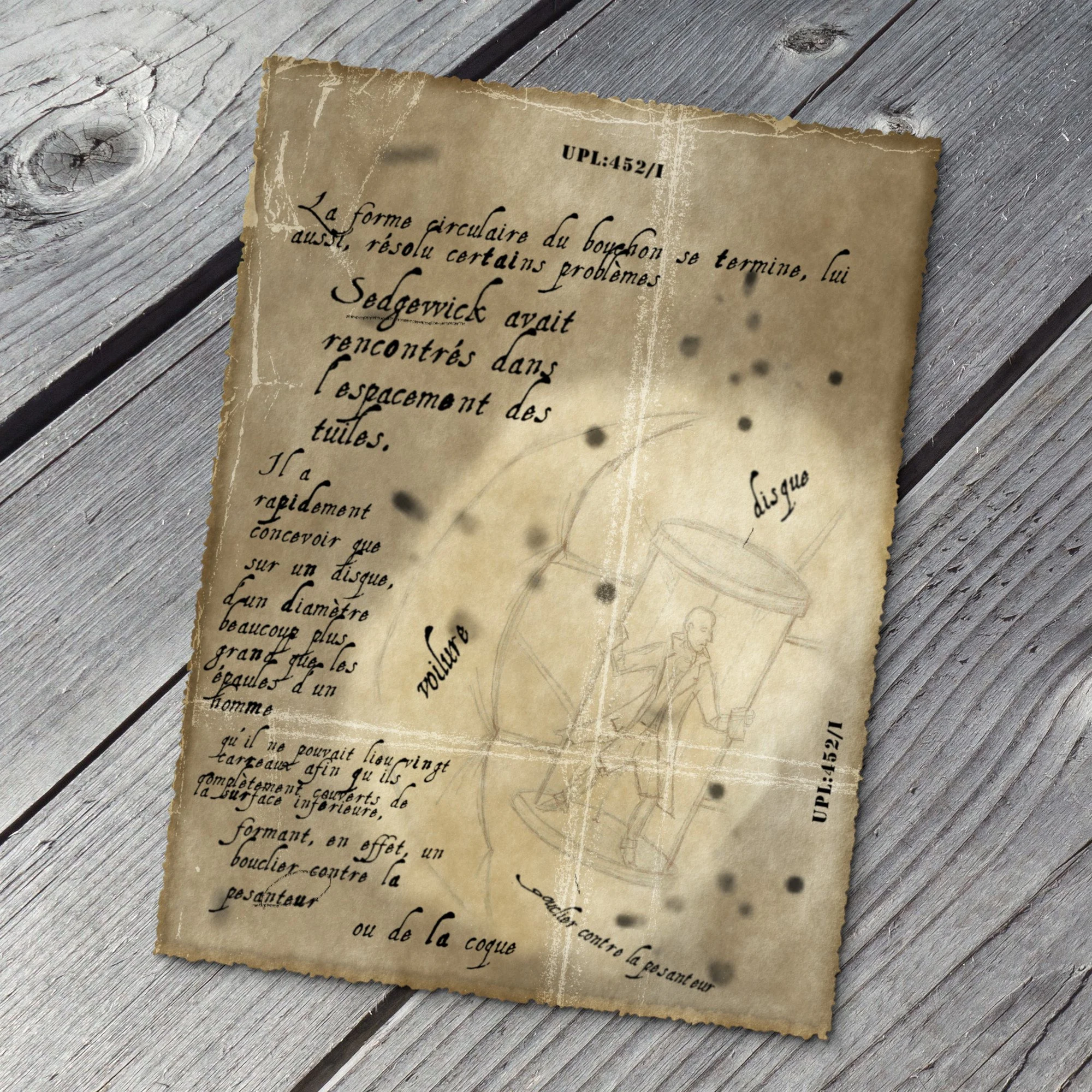
The Machine
Four Minutes Past Four
Epilogue
-
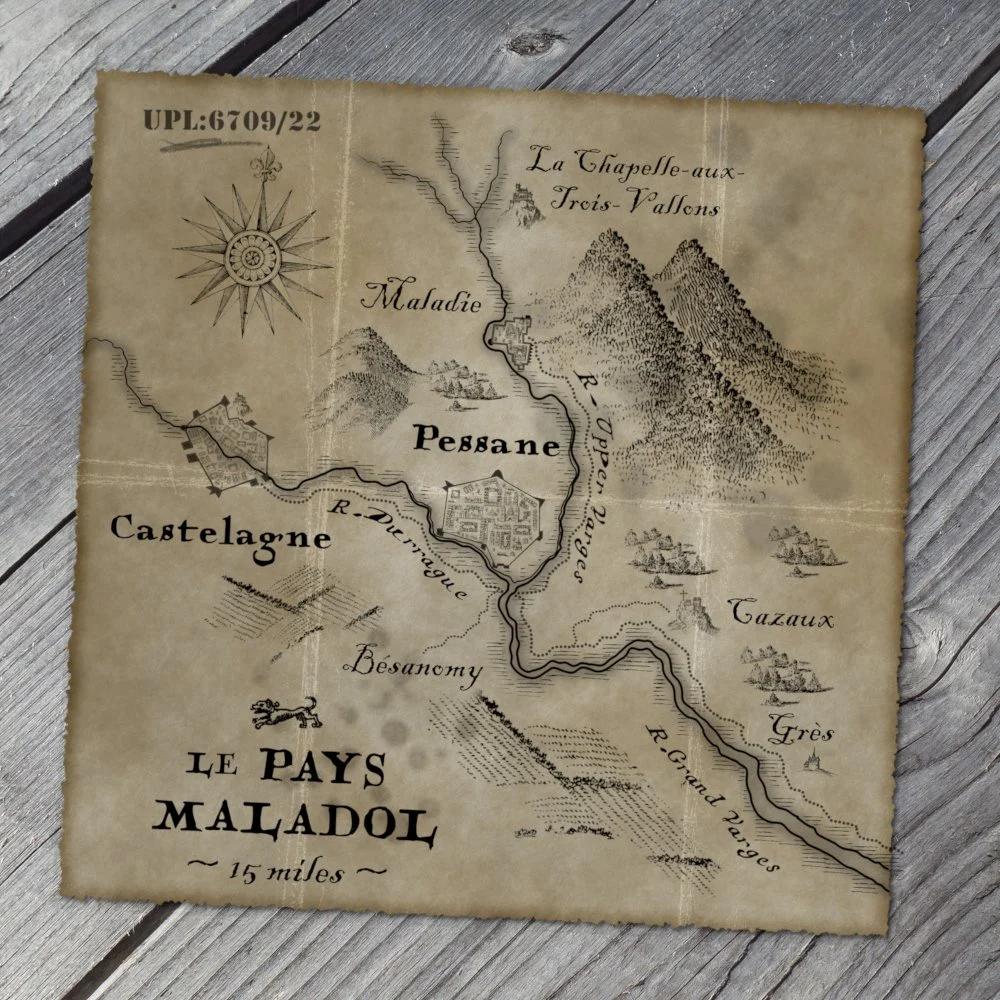
Map 1. Le Pays-Maladie. Map of Maladie region c. 1752, showing the principal locations mentioned in the text (Image: University of Pessane).
Map 2. Ville de Pessane. The city of Pessane c. 1765), showing the city and its environs (image: University of Pessane).
A stranger is found dead in the snow in woods outside the town. There are no footprints to or from the body; the victim’s coat, watch and shoes are missing and he has been beaten. The Bishop of Pessane is convinced the crime is the work of gypsies. Horthólary, however, suspects the man’s death is related to his curious passion.