Other Places
which also are the world’s end
Menlo spends her time digging up junk from the past; a past no one seems to care about. She might be any middle-aged woman - only, she is thirty light-years from home, and the past that no one cares about is Earth.
Read a sample
-
Menlo feels like she doesn’t belong. Distrusted by her employers and isolated within her community, she spends her time digging up old junk from the past; a past no one seems to care about. She might be any middle-aged woman; only, she is thirty light-years from home, her employers are the last intellectual elite, her neighbours live in Domes and the past that no one seems to care about is Earth.
Other places Which also are the World's End is a philosophical parable on the cycle of life and death. It asks: if you could live your life again, what would it look like? But this is not a story about missed opportunities or changing the past. It’s a novel that tells it as it is: if you had another life, the chances are you would mess it up again, only differently.
To explore this theme, jjhudsson has turned to one of the oldest explicatory forms of story-telling: the parable. In this ancient form, an apparently every-day tale reveals a more abstract meaning. Crucially, it is often left to the hearer to determine what that meaning may be.
So it is here. At one level, Other Places it is a story about a woman trying to find her way home and the adventures and people she meets along the way. This is the ‘carrier signal’. But woven within it is a philosophical meditation on life, death and the afterlife.
Parables have a bad rap. For one thing, they are closely associated with organised religion. For another, they are usually expounding some moral diktat. We wish for neither of things, so jjhudsson has brought his parable into the twenty-first century by setting the ‘everyday’ aspect of it in the future, and giving it a science fiction vibe. For the philosophical thread, he has kept it subtle and unprejudiced.
To convey the principal theme of cyclical time - that is, the philosophy of life not ending in death, but in the beginning of a new and different life - the author has leaned on T.S. Eliot’s poem Four Quartets (1944), whose well-known line “In my beginning is my end…” synthesises the concept neatly. This poem gives the story its structure, title, motivating forces and, indeed, some of its text.
To address the plot. The parable is set at the end of the 21st century. The development of interstellar transit has led to the founding of a human settlement on a distant planet. When communication with Earth is unexpectedly ended, in an event known as the Collapse, the settlers assume that the mantle of humanity now rests with them. They suppress mention of Old Earth and forbid any thought of return. However, some still believe in Old Earth and search for a way home. Menlo, our hero, is a middle-aged woman who finds herself on this planet with no knowledge of why she is there.
The planet, then, is the parable’s vehicle for ‘what if you could live your life again?’ Menlo’s unexplained appearance is her re-birth. What follows is her life in parable form: from the absolute security of home (literally, a protective shield), to the questioning of youth, the uncertainties of adult life (again, literally, a fog or cloud), love, friendship, deceit, illness, growth, acceptance and, ultimately, death.
But, in keeping with the Eliot theme, Menlo’s death is not the final chapter. What happens after is everyone’s unanswered question.
And the meaning? Like all parables, that is up to the reader: it’s life, after all.
-
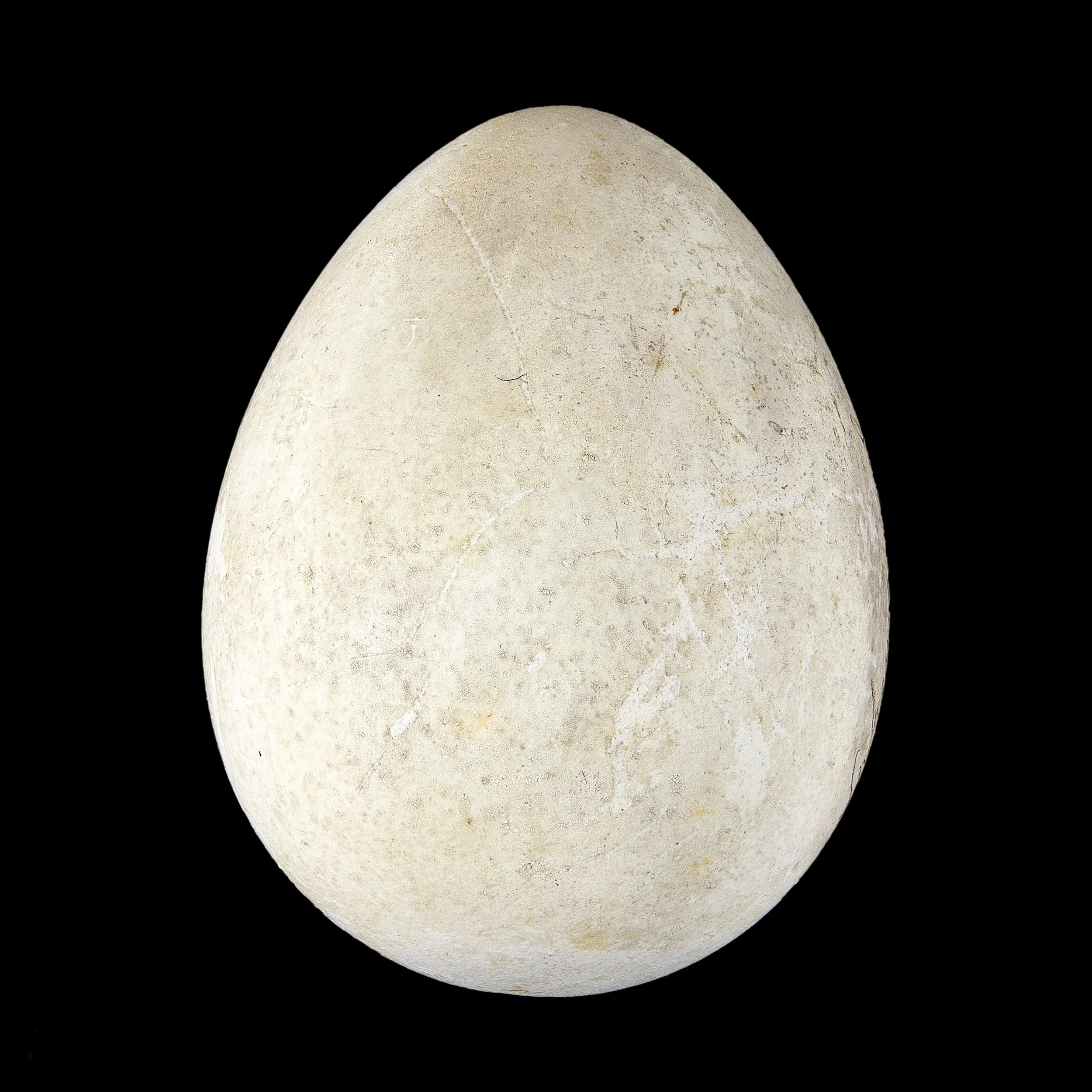
THE RETURNER CAME during elding in Koppen. He arrived with the greylight on the ninety-first Old Earth day of the Nea year. I had been watching the tide come up, when the old man who was sitting on the bench next to me offered to share his hard-boiled egg. I accepted, of course. Eggs are hard to come by on Nea and I didn’t mind that by accepting his offer I would probably have to engage in a conversation with him; the egg (or at least my half of it) would have been worth it. Only the old man said nothing and seemed to want nothing, bar the companionship of the egg and the roiling fog flowing out of the Cloud Well. So we sat, side by side in nephophilious silence, and watched the Rising until the vapours overwhelmed first, the Faculty of Life Sciences and then that of the Built Environment and Engineering. It was only as the searching miasma pooled in the shallow depression before our own dome that the man rose stiffly, and turning to go said: Die kurze Sonne entflammt das Eis.
Later, the Returner came.
No one knew why he came. No one knew where he came from or how he got inside the dome. Actually, I doubt that last statement is true: the domes are bristling with cameras, and even if the man (at first no one knew he was a Returner) was able to access one of the service tunnels that run beneath the domes - perhaps disguised as a co-port technician - the securios would have spotted him the moment he slipped into a corridor or dropped down from an air conditioning vent. That’s what must have happened. By the time he reached the seventh level, which is the level that the museum is on, he had two securios hot on his tracks. If he was ever disguised as a co-port he must have discarded the uniform along the way because when he crashed into me he wasn’t wearing a technician’s colours, he was fitted out like we all imagine a Returner to be fitted out, which is to say like a beggar - a tramp, a desert nomad. When I was summoned to give my account of the incident, the Provost didn’t seem much interested in the question of how the Returner got inside the dome. Instead she wanted to know why I left the museum and went into the corridor at the precise moment that the Returner bounded down Corridor F. Don’t imagine I was not aware of the implication. The Provost can’t conceive of coincidence. She refuses to believe that anyone could penetrate a Faculty dome so easily, at least not without help from within; and further, she doubts an impostor could make it all the way to the upper levels without knowing where precisely they intended to go. I have to admit she had a point. That something as slippery as Fate might have ordained that from the atrium the Returner chose the elevator button labelled Level Seven, and not Level Four or Level Eight, is perhaps allowable. But that from there he should have made directly for Corridor C and thence, by way of Turing Crossing and Sub-Corridor J, threaded a route into Corridor E is beginning to look suspicious. For him to have then turned at right angles into Corridor F and, putting a little distance between himself and the two pursuing securios, to have run headlong into the path of myself, so that for a few brief moments the two of us were alone in the corridor, well… And then, that it should be me, of all people, that the Returner ran into. There are four thousand plus people on Nea and of those less than fifty have spent time in the Monastery; what are the odds that the Returner should encounter one of the Uninvited and not any of the card-carrying ‘Neah’, as they like to call themselves? I’m not good with numbers (despite what they say) but I’m guessing those odds are high.
All of this I accepted (one can hardly argue with it) and had the Returner ended his expedition at the door of the museum I may well have found myself standing alongside him in the portal aperture. But this is not what happened. After disentangling himself from me, and without so much as a Beg Your Pardon, the Returner bounded down the remaining part of the corridor F. The junction with Thorne Crossing brought him up abruptly and here he hesitated, looking first left then right. Left would lead him towards the Central Archive; there was a lot of security that way. But if he chose right it would take him to a cafeteria with stairways and emergency exits to all areas of the dome. Just moments before the two securios entered the other end of the corridor, the Returner set-off - to the left. (Here Fate takes a bow.). By the time the two sweating securios caught up with him he had been floored by an exciplex laser fired by Archive security and lay writhing and twitching on the baudendron tiles. I daresay the securios would have captured him first had they not, inexplicably, been directed to turn right at the end of Corridor F, but as I told the Provost, anyone can make a mistake.
It must have been at about this point in our interview that the Provost asked why I had left the museum in the first place. I could have answered this question perfectly easily of course. I could have replied that I was going to (or arriving from) such and such a place - the cafeteria, the laundry, the library, any of those would do. But not only would it have been untrue, it would also be unwise. Because at the moment the Returner arrived in the dome, however he managed it, the air turned over - just like the old man on the bench had foretold. There was a change in pressure, and something on the wind like a song or a speck of dust was instantly propagated throughout the dome. Everyone noticed it. Whether you were a slammer sloughing off an amel suit in one of the basement changing rooms, a co-port engineer studying an array of display monitors or a PrimePort reading in the quiet of your unit: the air shifted. It turned over. Sand brought in from the Cloud Well rippled on the basement floor, columns of data flickered in their screens, a llanex petal crumbled suddenly to dust and floated off towards the air vents. I was cataloguing Old Earth artefacts. The sumanex labels I had attached to each lifted as one, like a sigh, and dropped again, heavy as death. It was no more than that. But denying that something had definitely, positively, absolutely happened was pointless. The air had turned. Of course, I wasn’t foolish enough to say as much to the Provost. I said something about a racket in the corridor outside - voices raised, the beating of feet and so on. Lies that might just have been true. True enough, at any rate, to satisfy the Provost - for the time being. Next came the inquisition. Did he say anything to you? Did he give you anything? Did he do anything, signify anything? To which I gave the appropriate answers which were: no, no, no and excuse me? All but the second answer were genuine. As for that last question - the one that had me puzzled - it meant, apparently, What did I think about it all. I stared blankly back. This was something I had experience in doing as a consequence of my various stays in the Monastery. Fortunately it was expected of me by the PrimePorts and therefore I was dismissed. Almost dismissed. Because just as I reached the door the Provost expressed the wish that I attend the execution.
THAT IS HOW it begins, this story I am to tell you: with an old man, a hard boiled egg, an intruder and an invitation to an execution. It has been said by someone wiser than myself that in our beginning is our end (I have included the exact wording in the foreword to this history if you are interested). Who is to say whether it is right or wrong? For my part I can’t help feeling it lacks a little drama. I hazard that one reason you have picked up this book and have begun to flick through the first few pages is an expectation that drama will ensue. I daresay that the prospect of an ouroboros of beginning-ending, life-death, consciousness-unconsciousness, existence-annihilation would be something of a disappointment and that that novel over there - the one about a mother and her daughter - is looking like it might make its way to the check-out instead of my story. To forestall such retail promiscuity let me quickly add that someone in this story (just a few pages ahead in fact) offers us a different perspective. They will say words to the effect that death without irony is merely an end, but add this one sentiment and almost invariably what you are left with is a beginning. I’ll hitch my literary colours to this statement; and further, I will make you, the prospective reader, this promise: there is irony in the execution, ergo we will have an honest beginning. Thereafter I think we can say without fear of contradiction there will be drama which may, or may not, include a pipe wrench, interstellar travel, afterbeasts, ambushes, bacchanalia, particle physics, kidnapping and cross-country hiking. As for those strange words, some of which you have just read - words like amel and baudendron, exciplex and PrimePort - have no fear, they will be explained as and when we come to them. And insomuch as endings and beginnings are one and the same, or may be so for some, I can only add that if the ending of this story bears some resemblance to its beginning the circumstance carries as much import as the reader cares to place upon it.
To press on then (because we are already a little late in getting to where we ought to be), let me introduce our second complication (the first being the presence of the man called the Returner of which we have just heard). It is relevant to our story. In fact, one might even say it is the story, in a curious sort of way. It is a dream, or perhaps better to say a recollection, I have been having of late. Well not of late - that is absurd, as I have been living on this planet now for twelve earth years. Nothing is of late for me, not even yesterday or the day before. (Incidentally, while the Readers Contract is still fresh in our minds I should add here that even concepts as simple as ‘day’ and ‘night’ will need to be revisited in due course, because on Nea they are not the same as on Old Earth.). But to return to the story: this dream (or perhaps it is a recollection) began during my first year here. You should know that this was a time of great turmoil in my life for, notwithstanding the diurnal difficulties to which I have alluded, I was grappling with questions bordering on the existential, namely: why was I here? That I had some purpose on Nea seemed very likely, given the attention that was bestowed upon me by my hosts, the PrimePorts. And there was the inescapable fact that that I had been ported here, which must have meant something. However, to the chagrin of all, I could not for the life of me recall what it was; or rather there was a void, an abyss, between what the PrimePorts seemed to expect of me and those abilities, interests and skills to which I was naturally disposed - a misalignment that resulted, as I have said, in several lengthy stays in the Monastery. As a result it took me longer than might be expected to realise that there even was a dream, and longer still to become aware that it could be a recollection. This dream (let us call it a dream for now) progressed gradually. First, it was nothing more than a vague feeling, a sensation hanging in the air above my bed upon my first waking. Later it coalesced from a sense to a distinct feeling; thence to a space, a room and then a room with things in it. These things were always the same things - machines, computers, buttons, dials. Eventually these sensations and feelings evolved to a point - this would have been five or nine Old Earth years ago now - when I began calling it a recollection. Then I could tell you, Yes, it is always the same, it always takes place in a room that I suspect is a hospital or a laboratory or one of those engineering test-beds we had back on Old Earth, and there is a woman there and she is not happy, not happy at all. For hundreds of iterations (by which you may assume I mean nights, although as I have indicated that concept is moot here so I prefer to say iterations) that was the long and short of it. I had a dream. Now it is a recollection. It recurred every once in a while or, if you prefer, now and then; sometimes less, sometimes more frequently. And in it an unhappy woman is in a test-bed or a hospital or a laboratory. I did not become aware of the man until relatively recently.
Now we have the two foundation stones of our story: the Returner, a man whom despite the moniker did not seem at all welcome in the Social and Historical Sciences dome; and a dream with rooms that we think might be one thing or another, and not one but two people (and of different sexes). All that is missing, you might think, is a happening. For it is all very well having visitors and dreams (even if the visitor is unwelcome and the dreams have strangers in them), but if they are to make a story then one or the other (and preferably both) ought to lead somewhere. At the very least, one might suggest, the internal one (the dream) should have an effect on the external world; it should bleed across the sub-consciousness barrier, so to speak. Or, conversely, the external thing (that is to say, the visitor) should, by virtue of their being stimulate an emotional or intellectual response that is mostly centred in the mind. You might think that. But foundations stones are rarely as important as what is laid upon them, at least in the eye of the beholder. Here we will find that these two elements have set off a vibration, a hum: that although they will resonate throughout what follows, they are more a basso continuo. It is other instruments and harmonies that will make our melody true.
YOU’LL WANT TO know about the execution, of course; that’s only natural. Almost everyone is interested in executions, except perhaps soldiers and other professional killers who probably view state-organised death as a threat to their business model. It was once believed that women predominated among the crowds assembled to watch the public executions that took place in eighteenth century Europe and at other times and places on Old Earth. I’m not so sure, or at least I think women were no more or less present than men at such events. In the end (and we are talking of endings now) most executions are nothing more than moral theatre, and who doesn’t like a little theatre with their morals? It helps them to go down. Either way, justice has very little to do with it. That was certainly the case with the Returner whose execution might best be described as a morality snuff play. There was a modest Enquiry into the circumstances of the Returner’s arrival in the dome. Who sent him? When did he travel to Heligoland? How had he circumvented the dome’s external security? What were his intentions once inside? The usual sort of thing. It’s doubtful anything novel was learned. The PrimePorts knew as well as anyone what the answers were: Tringley; within the last light-cycle; a Returner sympathiser let him in; and to steal some kit. To judge from the sorry condition of the man when he was brought in for Adjudication, and the fact that I was told to attend it, I am guessing the PrimePorts expected a little more in that last answer. As we have seen, after he ran into me the Returner had headed for the Archives. So a likely objective was to get some portal data - a cocoon serial number, some geotelemetrics, maybe even a spare part. That meant the question was: whose and why? If he ever knew (and from what we had heard about Tringley, he probably didn’t) he wasn’t saying. That much was evident from the Adjudication which relied on testimony from six individuals (the two securios among them). The charges were: a) entering a dome without due authorisation; and b) failure to wear or otherwise produce or give evidence of having a valid identity. These will get you a stint in the Monastery. (Trust me, I know.) The minor charges of running in the Atrium and in eight corridors, removing a vent without authorisation, impersonating a Co-Port and resisting arrest were all dropped to speed things along to the charge of c) being an adherent of, or sympathetic to, Tringley and/or the Returner sect. For this crime there is only one sentence: death. There was no defence, of course. How could there be? For one thing there was no defence counsel. For another the Returner himself was not permitted to speak; or rather he was unable to speak for the various reasons which we have already touched upon. The Adjudication, then, was Guilty and so the sentence: Execution.
Was it worth it, you ask? The lying and deception and for what end? I am speaking here of my own crime of course; a crime which, if not yet proven, must at least have been suspected by the Provost and his underlings, and no doubt by the reader too. Why else was I instructed to attend the macabre pantomime that followed if not to give myself away, perhaps by a silent nod to the condemned man or a pinch of the lip that bespeaks complicity? In answer to your question I say, It depends on what the lying and deception was about. One has to consider these things in context and in my case the context was complicated. On the one hand I was, or so I had been told, a PrimePort too. Therefore I ought to bear some allegiance to that social group; that is, after all, one of the primary purposes of such human constructs, ever since the first hairy hand picked up a river pebble and felt it comfortably heavy. On the other hand, I had no idea why I was on Nea or how I came to be there. It did not seem to me that I desired it in any way. And to judge by how my called fellow PrimePorts treated me upon my arrival, and still held their noses whenever they caught sight of me, my presence on the planet was equally unsatisfactory to them. So we stood, each of us eyeing the other with suspicion and, perhaps, a little darkness in our hearts.
As I have mentioned there were six of us: the Provost, the Pro-Vice-Provost, two securios and someone I couldn’t recognise because they never turned their full torso one way or the other to look around themselves and therefore I never got to see into their visor. And me. With the Returner that made seven. First we had to pass through security and then undergo a charade whose purpose was intended to keep the location of the portal hidden. I call it a charade because anyone with a half-decent timepix detector would be able to find it - nothing that pumps out that much galactic cosmic radiation can remain hidden for very long. And besides, it is well known that the dome for the Faculty of the Built Environment & Engineering (Dome One ‘B’ as it was then called) was raised around the portal so that the portal was at its very heart. In the early days there was still a hope (I won’t call it an expectation) that they would use it to return to Old Earth. That was before the Ircom, of course. Because of the radiation we were also wearing amel suits which, although primarily designed to filter out sunlight, also have a hydrogen-based cooling system that shields the wearer against high energy nuclei. As the six of us stomped into the aperture chamber (it is difficult to do anything other in an amel suit) we didn’t so much resemble the baying eighteenth mob as team of microchip engineers or those fearless people whose job back on Old Earth was to study deadly pathogens behind three or four layers of hermetically sealed glass. Promptly we arranged ourselves according to the principles revealed by the north American anthropologist Edward T Hall and labelled by him proxemics: the Important People stood together and the rest of us located ourselves orbitally about them, not so near as to be considered part of the Important Group but not so far as to be out of reach if needed (for example to remind them what they were here to do or to whom they were speaking). This meant I was standing between the Unknown Person and the first of the two securios. Here we waited.
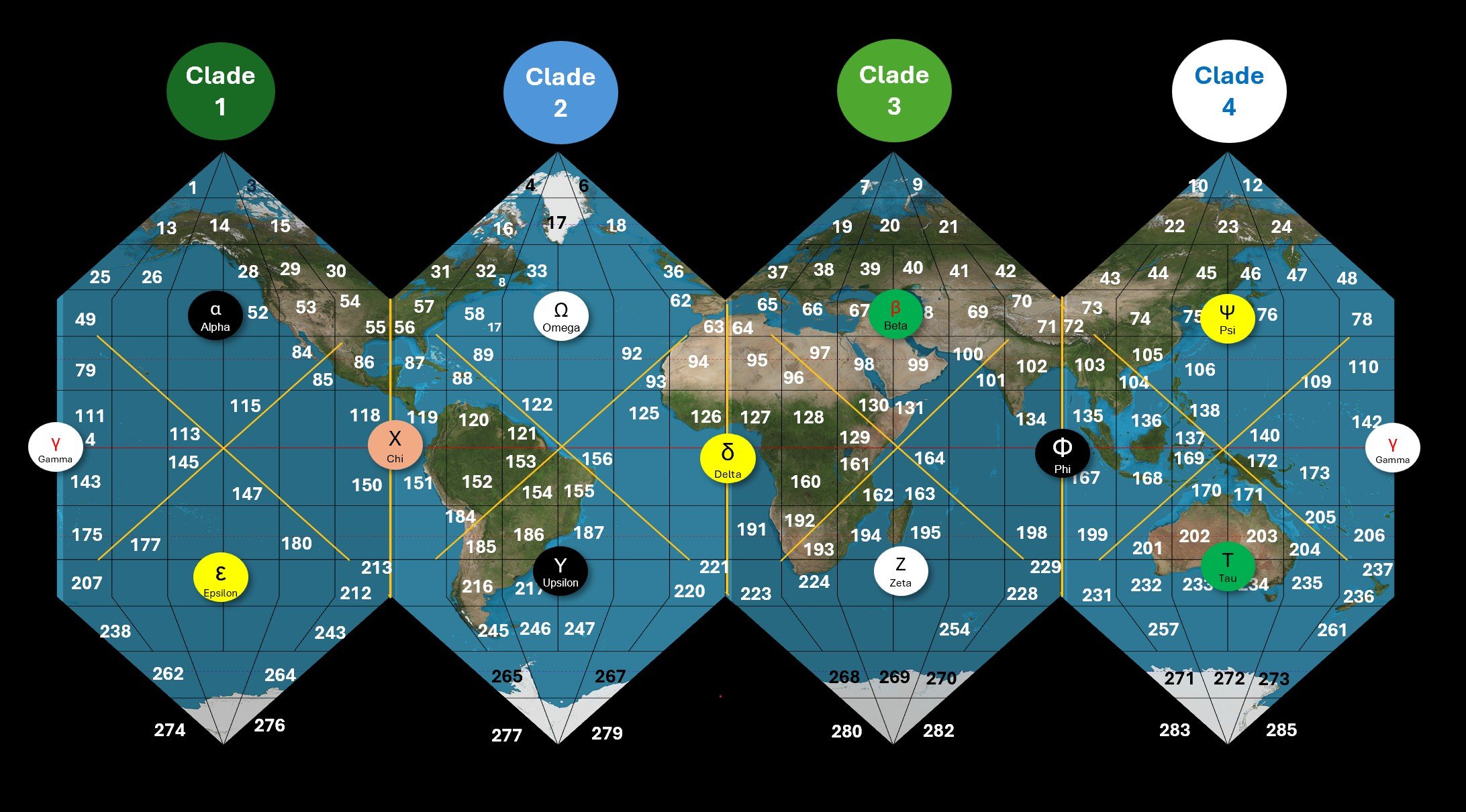
THERE IS NOTHING particularly special about a portal. There countless numbers of them on Nea but most are now closed. There are, however, approximately one hundred and seventy-one intermittent or ‘rogue’ portals, which are those that fizz into and out of existence for reasons no one yet understands. The reader my find the analogy of a garden hose-pipe helpful: if there is too much water pressure the hose can get out of hand and appears to develop a life of its own, writhing with unpredictable viperousness until the pressure is exhausted. When we speak of rogue portals we will also be speaking of slammers, whose unenviable task it was to close them. Live portals; that is, portals that are both open and stable (or relatively so) ought not to exist, on Nea or anywhere else for that matter. We will not delve into the details of portal dynamics here; it is the substance of our story and we will learn all about it as our story progresses. But for now let us mere note that although live portals should not exist, on Nea they do. Depending on who you believe there are one or there are two. However, only one is recognised by the PrimePorts and it was the one we were standing around, deep in the heart of the Faculty of the Built Environment & Engineering dome on Heligoland. Generally there is nothing whatever to see. A portal only becomes interesting (and dangerous) when it is active, at which point, if you happened to be looking at it you might see any one of the following:
(1) a flicker in reality. A bit like interference on an Old Earth television set, if you can remember those, where one image is replaced by another so that you are, in that one instant, caught in an uncertainty over whether what you just saw was really there or if what you now see has been there all along;
(2) a flash of darkness that appears to open from the left or right side and fold over itself in an instant (I’m talking milliseconds here) so that you gain the impression of a jolt of movement from one side to the other. This often makes a person falter in step or experience brief light-headedness so that it is said among the slammers, who make their living shutting down rogue ports, that the last thing you see when someone walks too close to one is that they raise one hand to their head in what slammers call a portal ‘salute’;
(3) an unzipping of the air, as if the reality in front of you has been cleft in two by a magnificent intra-universal hatchet. This is rare. I have only heard of the phenomenon from the lips of September Deal who, as we shall see, is not always the most reliable of informants;
(4) nothing whatever. That is to say what happens, happens so fast you could be forgiven for not noticing. If you were walking as a pair, now you are walking alone. Where once there are two sets of footprints in the sand, now there is only one. No warning. No cry.
You should understand that I am generalising quite freely in setting out these categories. Were you to ask any one of the four thousand or so Neah (as they call themselves) I am quite certain you would find half a dozen equally convincing descriptions. However, I think all of them would conform in some way or other to the principal elements I have set out. Given the unquestioned intellect of the reader who, having read this far is even now replacing that book about mothers and daughters back on its table, it is perhaps unnecessary to clarify what a portal is not: they are not time-machines, space machines, gravity machines or, indeed, machines of any kind. Neither are portals ancient stone gateways operated by enrobed priests or priestesses uttering strange-sounding incantations and there is generally no gently pulsing plasma anywhere near them. A portal itself is, in fact, nothing at all. As we have noted above, you could walk right passed one and not know it was there (which goes some way to explaining the unhinged nature of slammers who spend most of their time doing just that). But that is not to say that portals are artisan. Indeed to create a portal one needs very large and complex machines or, as we shall see, extremely small ones that might fit on a desk or in a briefcase. Either way a good deal of hard science is required, and it is not merely the fact that the transvecting spheres designed by Funes and Rigas operate remotely from their mechagenesis that leads me to say a portal is nothing much to look at, it is also the observation that, of course, at the deslizaration point there is nothing mechanical whatever. So perhaps it would be better to say that portals are a place where nothing ever happens - until suddenly it does.
None of this is to say that portals are uninteresting places to be - particularly if, like the Returner, you are about to experience the inside of one. I should imagine you have already come to the conclusion that this will result in his death. Or perhaps you reasoned that if humans arrived on Nea through portals, then he who bears the sobriquet The Returner and who now steps into one, will be transported as if by magic (which it very nearly is) back to Old Earth. Alas it is not so. If this were the case I would have no story to tell. The truth of the matter is that unless very precise conditions are met, using carefully calibrated biometric equipment and a bewildering array of superposition probability algorithms, anyone entering a live portal will be instantaneously disassembled and atomically stretched into a near infinite stream of matter. I doubt it is a painful death as deaths go. Preferable I should imagine to that suffered by Margaret Clitherow who in 1586 was laid naked across a sharp stone in York while the door of her house was laid upon her and loaded with so many stones that her back broke in two. Or that of Tomas Orleu who, falling foul of the Vasaks in the mid sixteenth century, was forced to consume gunpowder which was ignited with a burning taper thrust down his throat. They say that the Roman general Crassus was put to death by the Parthians by means of molten gold poured down his throat, the cold cast of which was returned to Rome as a very expensive message. (Perhaps we shouldn’t believe everything we hear about the Parthians.).
There was very little ceremony for the Returner. This was the first time I had got a look at him. It had taken only a few seconds for him to push past me in Corridor F and when someone runs full tilt at you you often forget your manners and fail to look them in the eye. Instead you find yourself attending to staying on your feet or getting out of the way. Through the small oblong of my visor, I could see that he had the complexion of a hinterlander. He was wearing the usual off-colony clothing, that is to say scarcely anything more than rags. And it was obvious the conversations he had been having with the PrimePorts since his capture had been both vigorous and one-sided. The two securios had to drag him towards the Provost, leaving a wandering spatter of blood and sweat on the cold baudendron floor. As a rule PrimePorts don’t pass up the opportunity to make speeches but unusually, on this occasion the Provost said not one word. She merely nodded and the securios hauled the condemned man over to the deslizaration floor, a well-lit circular space surrounded by protective alphamelvitran plate. A portal’s aperture, when it opens, admits a good deal of Galactic Cosmic Radiation (hence the amel suits), which leaves an oval or trapezoidal area of discolouration on the ground - a tell-tale sign of an active portal. The securios dragged the Returner into the middle of this stain and beat a hasty retreat to behind the amel plate. Evidently the Returner was expected to wait patiently for the portal to burst back into life. A life for a life. But nothing happened. The securios shifted uneasily. The radiation shadow is a good proxy for where the aperture of a live portal will be, but the Universe being the Universe one can never be absolutely certain. There is often a little wiggle room and no one wants to be crossing the aperture when a portal opens. That’s why we have slammers. And so we waited. Time passed like flatulence in a lift. We waited and the Returner, unable to remain standing, slumped to his knees on the deslizaration floor. And still we waited. Predicting when a rogue port will open is almost impossible. But this was a stable port - one of only two, it was said, on the entire planet - it would have been well studied and I was certain we wouldn’t be standing here like fools if the PrimePorts weren’t certain it was about to open. The Provost looked at her watch. The Pro-Vice-Provost, who harboured ambitions himself, coughed loudly and began to make the unmistakable contortions preparatory to speech. I forget what his opening words were, but it is of no consequence because he didn’t get to complete them. As if in response to some collective plea on the audience’s part, no sooner had he begun to speak than the air over the deslizeration floor flickered and shimmered. That ought to have been that. However, the Returner, who was now kneeling with his head on his chest - remained kneeling with his head on his chest. He had gone nowhere. After a moment he looked up from under a fringe of greasy hair and began to laugh. At this the Unknown Man beside me leapt into the circle. He brandished a plasma probe, which I hadn’t seen before, and with this he directed a short blast towards the legs of the genuflecting man such that he was impelled with sudden violence several feet across the deslizeration floor, whereupon he vanished.
-
Front Matter
PART I: AIR
Chapter 1 The Returner
Chapter 2 The Museum of Lost Worlds
Chapter 3 The Ghau
Chapter 4 Life & Death on Nea
PART II: WATER
Chapter 5 The Rim
Chapter 6 The Cloud Well
Chapter 7 Lighterman's Cabin
Chapter 8 Hunted
Chapter 9 Afterbeast
PART III: EARTH
Chapter 10 Dome 3
Chapter 11 The Returners
Chapter 12 Tringley
Chapter 13 The Second Portal
Chapter 14The Battle of Roughton Heath
PART IV: FIRE
Chapter 15 Time with Tolly
Chapter 16 In the City
Chapter 17 On the way to the Cape
Chapter 18 The Blue Hut
Glossary
Acknowledgments
Further Information
-
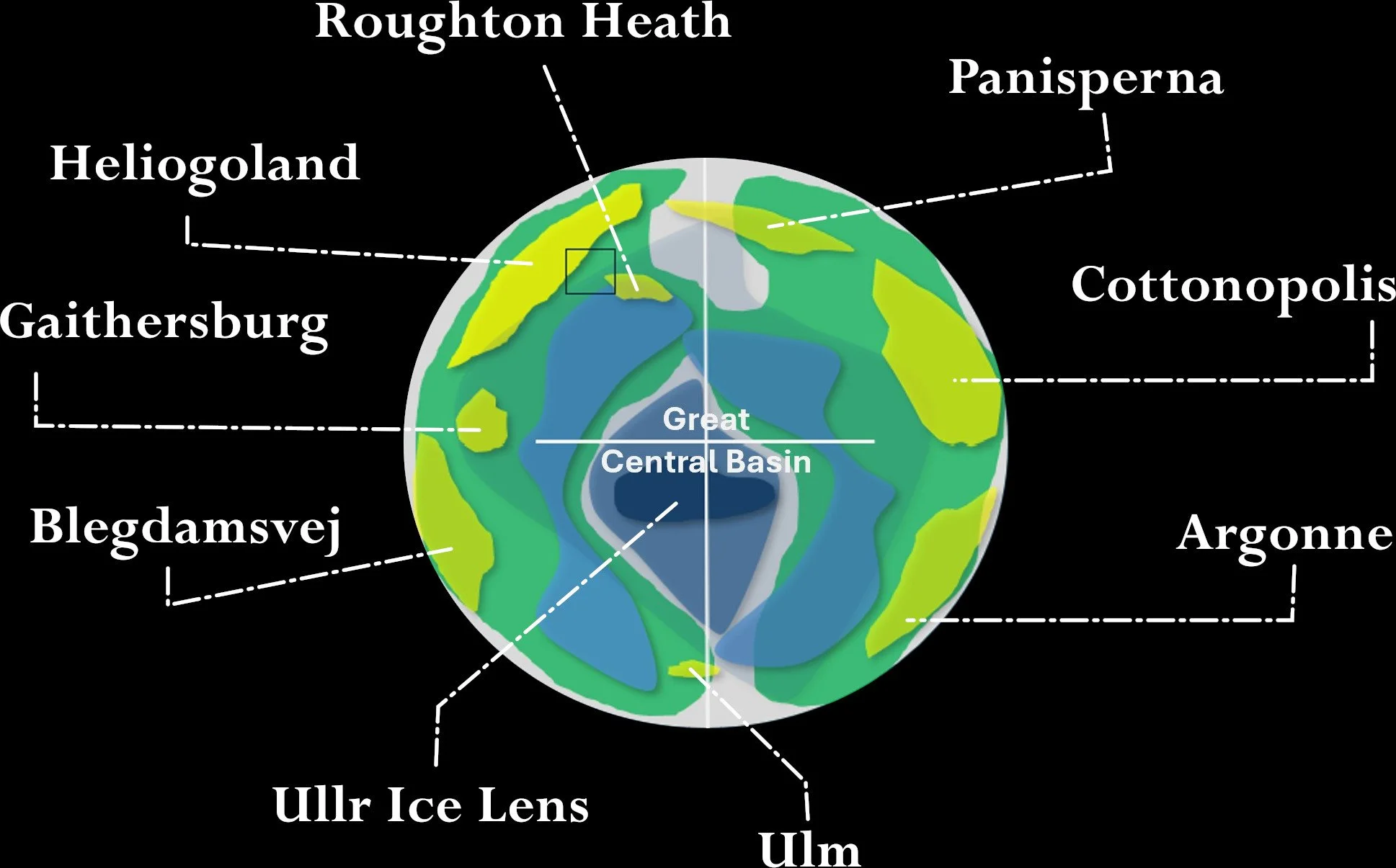
Map 1. The Planet Nea. Infra-red satellite image of Nea, in the Gydda 1969b Constellation, showing the supravaporous regions (Image: UNWGIT).
Map 2. Journey Across Nea. Detail of Nea surface showing the approximate route taken by Menlo and Deal (Image: Faculty of Engineering, Dome 1b).

Menlo feels like she doesn’t belong. Distrusted by her employers and isolated within her community, she spends her time digging up old junk from the past; a past no one seems to care about. She might be any middle-aged woman; only, she is thirty light-years from home, her employers are the last intellectual elite, her neighbours live in Domes and the past that no one seems to care about is Earth.